
Problem
Like many enterprises, a major Oil & Gas corporation had major inefficiencies with its procurement process.
They were also using antiqued software that wasn’t meeting their growing needs.
Employees throughout the organization were spending excessive time filling out lengthy forms and vendors were complaining about the lack of integration with their systems.
The Team
I was the design director and also lead the strategy efforts and part for a 5-person team, which consisted of:
- 1 Engagement Manager
- 1 Sr. Associate Strategist
- 2 Associate Business Analysts
This was causing significant increases in processing time and delays in fulfillment.
It was costing the company hundreds of millions of dollars per year.
Objective
They needed to find out what the problem was, from the actual end-users, and come up with recommendations on how they could solve most of them through the selection and implementation of new procurement software.
Interview
In order to help determine the most effective path, upgrade or implement a completely new system, we started by talking to their users.
Using a human-centric approach, I sought out to find out how actual users used the current system, discover their pain points, analyze their current processes, and get their wish lists.
I interviewed 120 employees throughout the company. I went to refineries throughout California to satellite offices in Texas to their global HQ. I even talked to employees on oil rigs in the middle of the Gulf of Mexico.
In-depth conversations focus on uncovering the user’s experience through a lens of empathy (hearing, seeing, thinking, doing) and understanding why a user isn’t realizing the full potential of an experience.

Personas
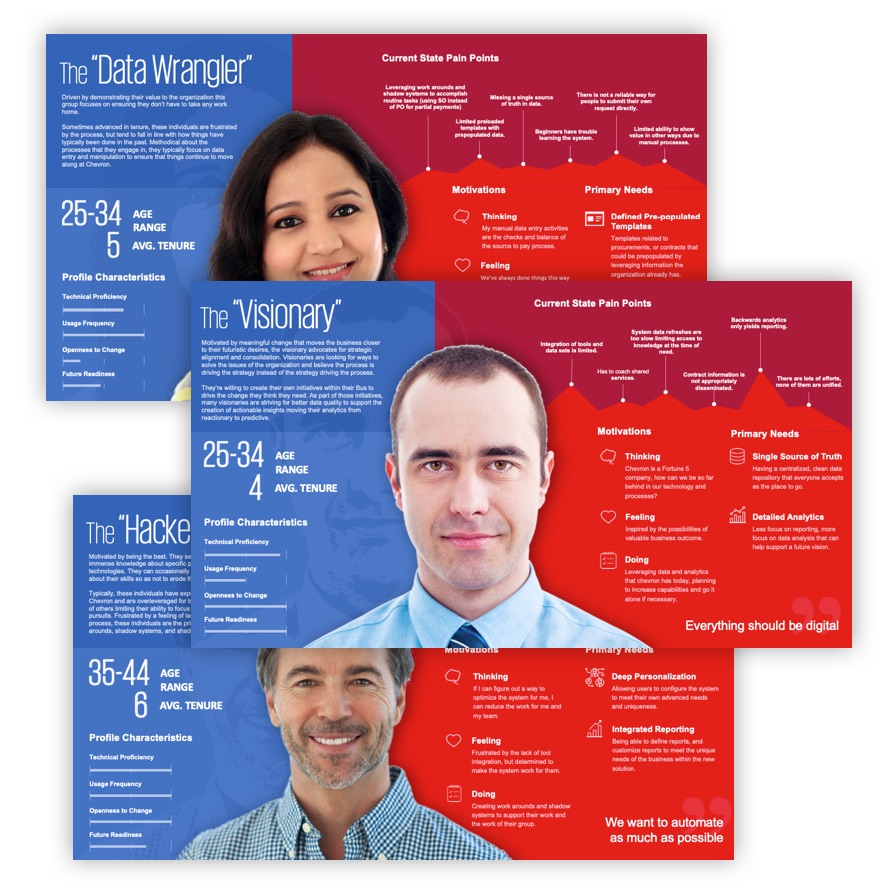
I translated this data into insights, detailed personas, current and future-state journey maps, and a prioritized list of features and functionality.
Personas capture key sentiments, identify unique values and provide insight to their motivations.
Workshop
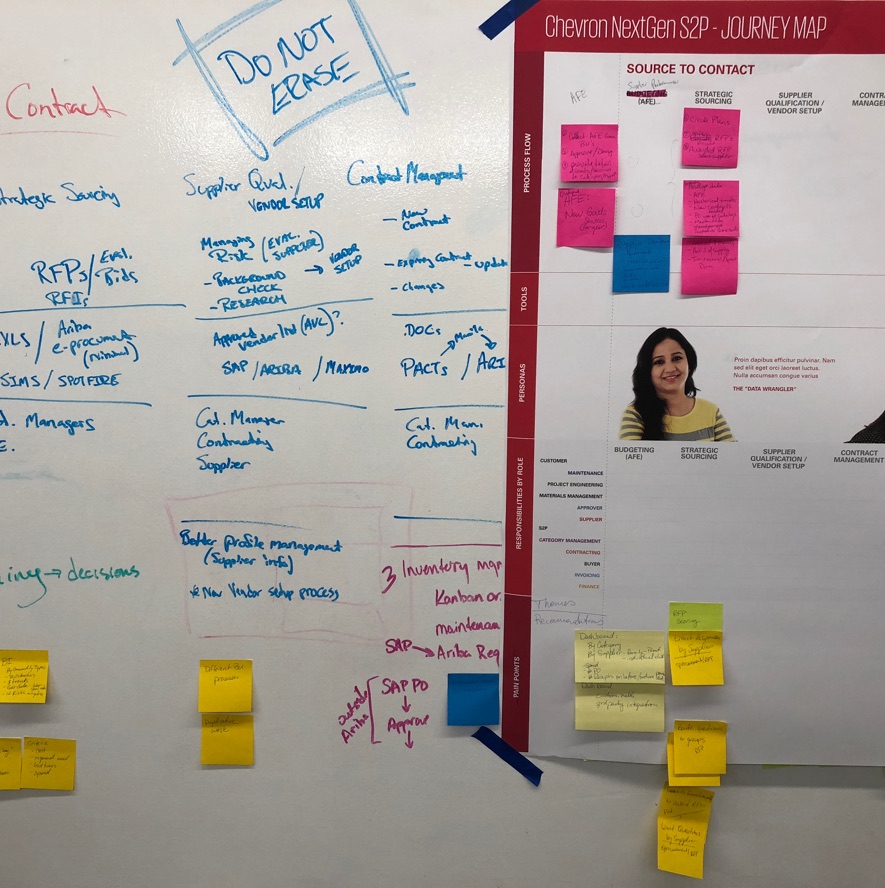
With the vast amount of data and learnings we collected from the interviews, I facilitated a workshop to brainstorm ideas on how we can improve the procurement process.
Customer Journey
After the session, we had a conference room full of sticky notes and majorly marked-up whiteboards.
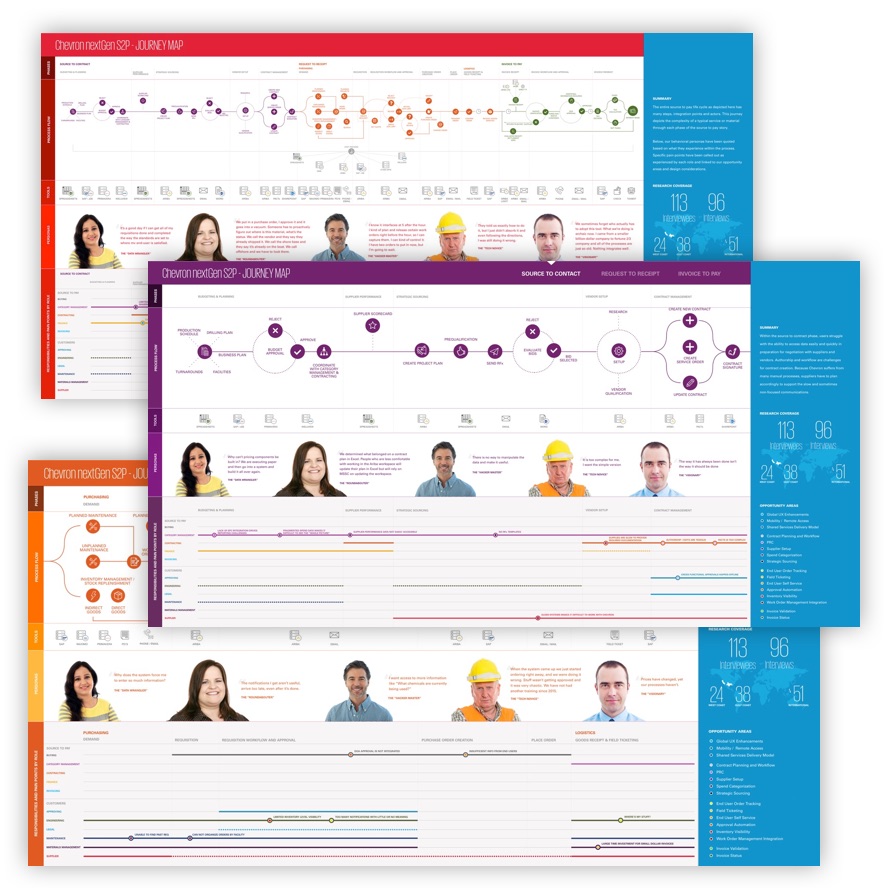
I took those and created a series of comprehensive customer journey maps that explained the complex processes from start to finish.
I then overlaid these maps with the key pain points, roles, and suggested areas of opportunity.
Narratives
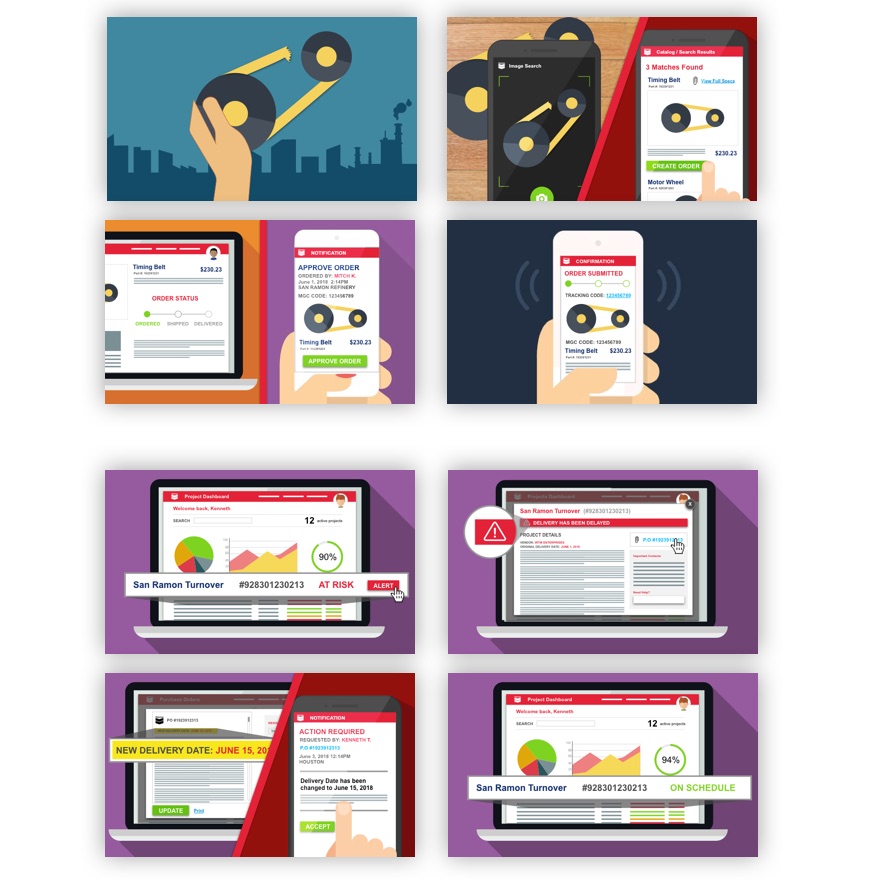
I turned the top-requested features into illustrative narratives that I presented to C-level stakeholders.
This clearly and easily outlined the end result and business value of our proposed solutions.

Results
This UX strategy project led to a few key wins for the firm.
The findings helped aid the clients’ selection of a third-party procurement system which solved 70% of the problem areas, that we identified.
We were selected to lead a large digital transformation engagement to build and implement the remaining functionality.
What I learned
- There is such a thing as too many user interviews
- Journey maps are helpful for visualization but aren’t very actionable
- Recording interviews is helpful, when possible
- Remote area locations often make interviewing difficult
- Taking good notes is an art form, not to be taken for granted